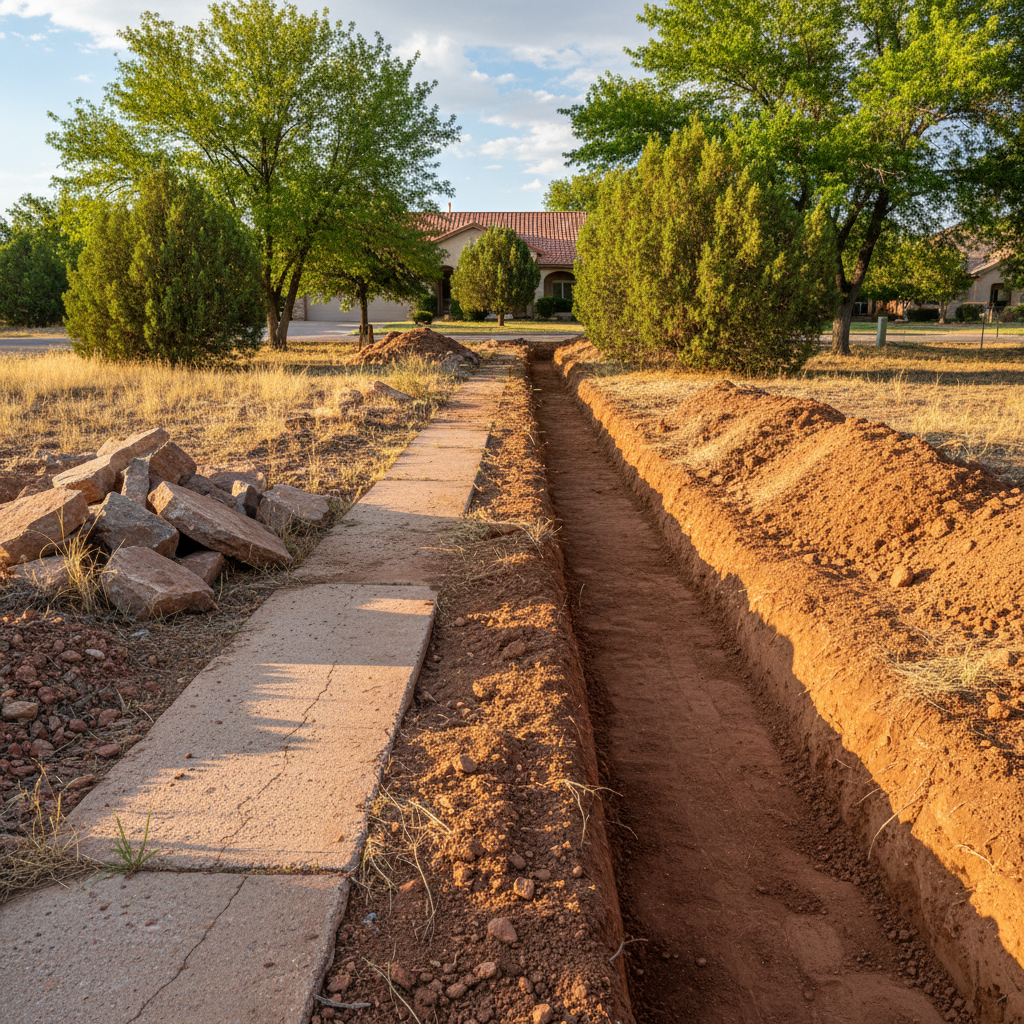
Alright, let's talk trenches. If you're a homeowner here in Prescott Valley and you've got a project that needs a ditch dug – maybe for a new irrigation line, some electrical conduit, or even a drainage solution – you're probably wondering if you should grab a shovel or call in the big guns. It's a common question, and honestly, there's no single perfect answer. But I can tell you what I've seen work best over the years, and what to watch out for.
The Old-Fashioned Way: Hand Digging
So, hand digging. It's exactly what it sounds like: you, a shovel, maybe a pickaxe, and a whole lot of sweat. When does this make sense? Well...
- Small, Shallow Jobs: If you're just running a short length of low-voltage landscape lighting wire, or maybe a single sprinkler line across a small flower bed, hand digging can be perfectly fine. You don't need a massive trench, and you're probably not going super deep.
- Tight Spaces: Got a really narrow spot between your house and a fence? Or need to weave around delicate landscaping you don't want to disturb? A shovel can get into places a machine just can't. You've got precision control, which is a big plus for avoiding existing utilities or prized plants.
- Cost (Upfront): The only cost here is your time and maybe a sore back. If you're doing it yourself, you're saving on equipment rental or contractor fees.
But here's the flip side. Hand digging is back-breaking work, especially in our rocky Prescott Valley soil. Try digging a 2-foot deep trench through some of that decomposed granite we've got around here, and you'll quickly understand why machines exist. It's slow, physically demanding, and for anything more than a short, shallow run, it's just not practical for most folks. You're also more likely to hit something you shouldn't if you're not experienced with locating utilities.
Bringing in the Big Guns: Machine Trenching
Now, machine trenching. This is where you bring in a trencher or a small excavator. This is what we do at Alpha Excavating Co, and for good reason.
- Speed and Efficiency: This is the biggest advantage, hands down. A machine can dig hundreds of feet of trench in a fraction of the time it would take by hand. This means your project gets done faster, and you can get on with the next step.
- Depth and Width: Need a deep trench for a main water line or a wide one for a French drain? Machines handle it with ease. You get consistent depth and width, which is important for proper pipe bedding and drainage.
- Tough Terrain: Our Arizona soil doesn't scare a machine. Those rocks and compacted dirt that would make you want to throw your shovel across the yard? A machine chews right through them. This is crucial for larger projects or anything beyond a few inches deep.
- Durability of Installation: While the trench itself isn't durable, how the pipe or conduit is laid in it definitely impacts durability. With a machine, you get a consistently graded trench, which is vital for proper water flow in irrigation or drainage systems. This consistency leads to a more reliable, longer-lasting installation.
- Cost (Overall): While the upfront cost is higher because you're paying for equipment and an operator, the overall cost can actually be lower for medium to large jobs. You save on labor hours, and the job gets done right the first time, preventing costly fixes down the road.
The main drawback? Machines can be less precise in super tight spots, and they do create more disruption to your yard initially. You'll have spoil piles, and it'll look a bit messy until we backfill and clean up. But for anything substantial, the benefits far outweigh these minor inconveniences.
My Recommendation for Prescott Valley Homeowners
Look, for most homeowners in Prescott Valley, especially with our typical soil conditions, machine trenching is almost always the better choice for anything beyond the smallest, most superficial jobs. If you're installing a new irrigation system for your whole yard, running power to a shed, or putting in a proper drainage system around your house, don't even think about a shovel. You'll save your back, your time, and likely get a much better, more durable result in the long run.
You want a clean, consistent trench that's dug to the right depth and grade, especially if you're dealing with water lines or drainage. That's what machines are built for. Plus, a professional operator knows how to read the ground, identify potential issues, and work safely around existing utilities. Give us a call at Alpha Excavating Co, and we can come out, take a look at your project, and give you an honest assessment of what it'll take.