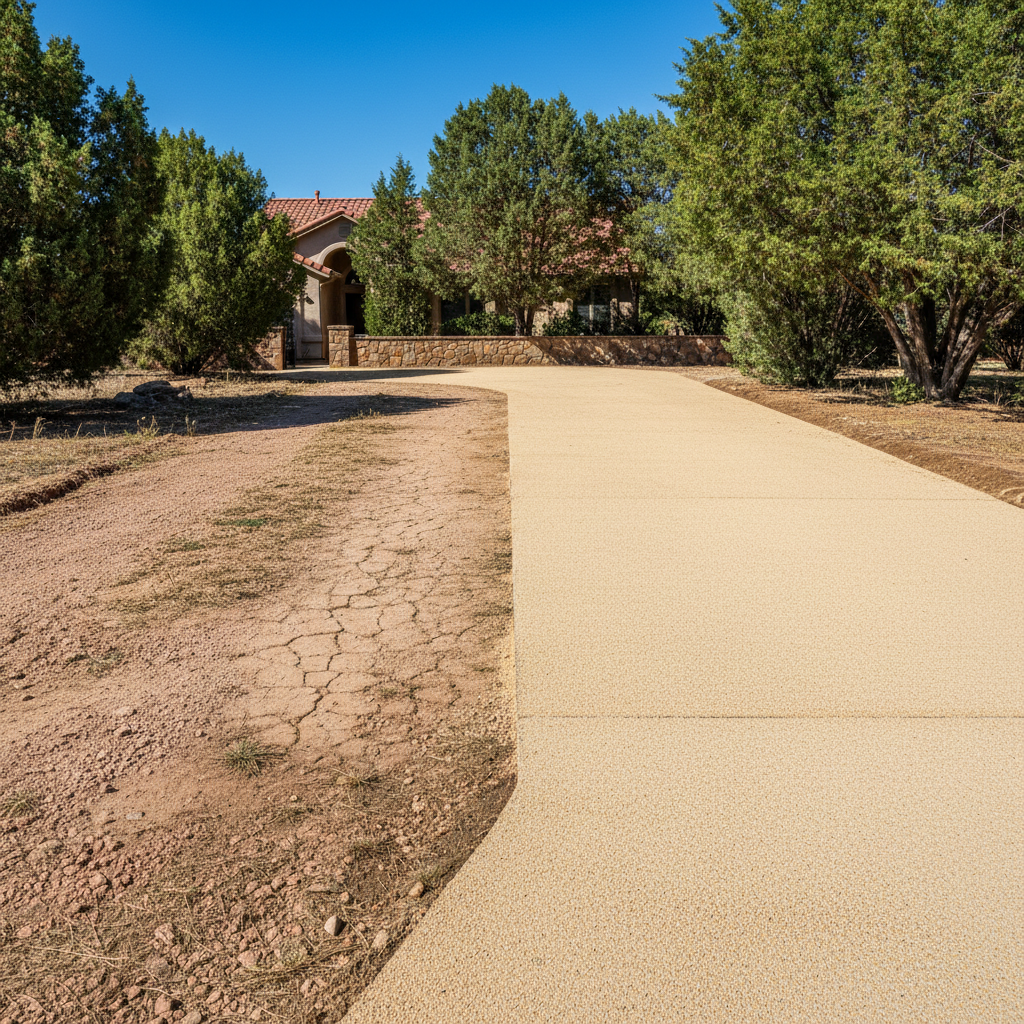
Gravel Driveway vs. Compacted Base: What's Best for Your PV Home?
Building a new driveway or fixing up an old one? You've got options for how you prep that surface, and it's not just about throwing down some rock and calling it good. Here in Prescott Valley, with our monsoon seasons and the occasional heavy snow, what's underneath your driveway really matters. I’m talking about the difference between a simple gravel layer and a properly installed, compacted base. Let's break down what each means for your wallet, your back, and how long that driveway's gonna last.
Just Gravel: The Quick & Dirty Approach
So, you're thinking about just dumping some gravel, spreading it out, and letting it be your driveway. It's definitely the cheaper, quicker option upfront, no doubt about it. You can get a load of aggregate delivered, spread it with a tractor or even by hand if it's a small area, and you're done for the day. It looks decent for a while, especially when it's a fresh layer.
Cost & Installation
This is where 'just gravel' shines, at first. You're paying for the material and the labor to spread it. No fancy equipment for compacting, no multiple layers. It's the lowest initial investment you can make for a driveway surface. For a lot of folks on a tight budget, it seems like the obvious choice.
Durability & Maintenance
Here's where the shine starts to wear off, literally. Without a solid, compacted base underneath, that gravel is going to move. Heavy rains, like the ones we get in July and August, will wash it out. You'll get ruts, potholes, and the gravel will migrate to the sides of the driveway. You'll be raking it back, filling in low spots, and adding more gravel every year or two. It's a never-ending cycle. Plus, if you've got a slope, forget about it – that gravel is heading downhill fast. I've seen driveways in places like the Pronghorn Ranch area that just get eaten away by runoff if they don't have proper drainage and a good base.
Appearance
It looks good for a bit, but as soon as it starts shifting and washing out, it looks pretty messy. Not exactly the curb appeal you're probably aiming for.
The Compacted Base: Doing It Right
Now, let's talk about a proper compacted base. This isn't just one layer of rock. It's usually a few layers of different aggregate materials, each compacted down tight. We typically start with a larger, coarser aggregate for stability, then a finer material on top, and sometimes a final wear layer of smaller gravel or decomposed granite. Each layer gets watered and compacted with heavy equipment, like a vibratory roller, until it's super dense.
Cost & Installation
Yeah, this is going to cost you more upfront. You're paying for more material, more labor, and the use of specialized compaction equipment. It takes longer to install too, because we're doing it in stages. But think of it as an investment, not just an expense.
Durability & Maintenance
This is where a compacted base absolutely crushes 'just gravel.' When you compact the base materials correctly, you create a stable, interlocked surface that doesn't easily wash out or shift. It can handle heavy vehicles, monsoon rains, and even our winter snowmelt without turning into a muddy mess or a rutted obstacle course. The water sheds off it properly, and you won't have to constantly add new material. Maintenance becomes minimal – maybe an occasional top-up of the wear layer every few years, or just keeping it clear of debris.
Appearance
A well-graded and compacted driveway looks sharp. It's smooth, uniform, and gives a much more finished look to your property. It holds its shape and its aesthetic appeal for years and years, which adds value to your home.
My Recommendation for Prescott Valley Homeowners
Look, I've been doing this a long time with Alpha Excavating Co, and I've seen it all. Here in Prescott Valley, with our clay soils in some areas, our intense summer storms, and the freeze-thaw cycles we get, a compacted base isn't just a nice-to-have – it's practically a necessity for a durable, low-maintenance driveway. The initial savings you get from 'just gravel' will quickly be eaten up by constant repairs, buying more material, and the sheer frustration of dealing with a constantly failing driveway.
If you want a driveway that's going to stand the test of time, handle the weather, and require minimal fuss, invest in a proper compacted base. It's the smart choice that pays off in the long run. You'll thank yourself every time it rains and your driveway still looks great.
The Bottom Line
While 'just gravel' might seem appealing for its low upfront cost, it's a short-term solution that leads to long-term headaches and expenses. A properly installed, compacted base is a more significant initial investment, but it delivers superior durability, requires far less maintenance, and maintains its appearance for years. For homeowners in Prescott Valley, especially with our unique weather and soil conditions, choosing a compacted base is almost always the better decision.